
Blog / Article
Who Fixes Air Conditioners Near Me? A Homeowner's Guide
Published July 4, 2026
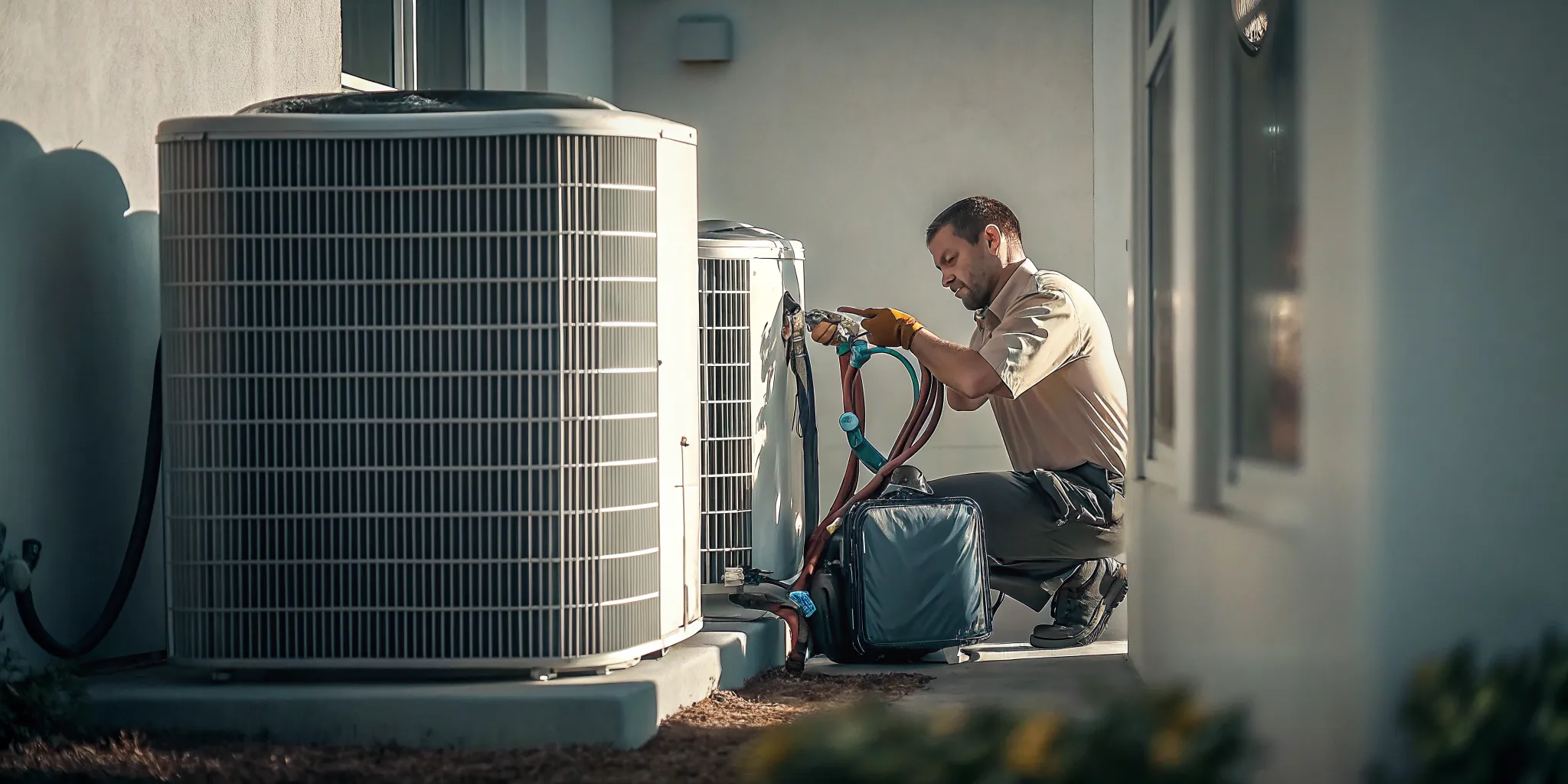
When your air conditioner quits on a sweltering South Florida afternoon, the first thought is pure panic. The second is usually, "Who do I even call for this?" You start frantically searching for 'who fixes air conditioners near me,' and you're hit with a wall of options: HVAC technicians, licensed contractors, and certified specialists. It’s confusing, and the last thing you want is to make the wrong choice while your home turns into a sauna. This guide is here to cut through that confusion. We'll break down exactly who does what, what to try before you call, and how to find a reliable professional you can trust to get your cool air back on, fast.
Key Takeaways
- Handle the simple checks first: Before making a service call, take a few minutes to check your thermostat settings, reset the circuit breaker, and inspect the air filter. These simple steps can often solve the problem and save you the cost of a visit.
- Vet your pro for a stress-free repair: Look for a licensed and insured company with a strong history of positive customer reviews. Getting at least three written estimates and asking about service warranties ensures you receive quality work at a fair price.
- Know what to expect from the service call: A professional visit includes a diagnostic fee for the initial inspection, followed by a clear, upfront quote for any repairs. A good technician will explain your options and help you decide if a repair or a full replacement makes more sense for your situation.
Who Should You Call to Fix Your AC?
When your air conditioner stops working on a sweltering Florida day, the first question is usually, "Who do I even call?" It can feel a little confusing because you'll hear a few different titles thrown around, like HVAC tech and mechanical contractor. While they can all fix an AC, they have different qualifications and specialties. Understanding the difference will help you find the right professional for your specific problem, ensuring you get a fast and effective repair. Let's walk through the main types of pros you can hire.
HVAC technicians
An HVAC technician is your go-to expert for most air conditioning issues. HVAC stands for Heating, Ventilation, and Air Conditioning, and these technicians are trained to handle the repair and maintenance of these systems. Think of them as the general practitioners for your home's climate control. They can diagnose strange noises, figure out why your unit isn't cooling, and perform routine maintenance to keep everything running smoothly. Regular service not only helps your AC last longer but also improves your home's air quality and prevents surprise breakdowns during a heatwave. For most standard repairs and annual tune-ups, a qualified HVAC technician is exactly who you need.
Licensed mechanical contractors
A licensed mechanical contractor is a person or company that holds a state-issued license to work on mechanical systems, including your AC. This license means they've met specific state requirements for experience and knowledge, and they're held to a higher standard for following safety and building codes. While many HVAC techs work for a licensed contractor, you might hire the contractor directly for bigger jobs, like installing a brand-new AC system or rerouting ductwork. Hiring a licensed professional gives you peace of mind, knowing the work is compliant and insured. You can always verify a contractor's license through Florida's Department of Business and Professional Regulation to ensure they're in good standing.
Manufacturer-certified technicians
If you want a specialist for your particular brand of air conditioner, look for a manufacturer-certified technician. Companies like Carrier, Trane, and Lennox offer special training programs for technicians to become experts on their equipment. The main advantage is that these pros have special training on specific systems and use genuine manufacturer parts for repairs, which can be crucial for performance and longevity. If your AC unit is relatively new or still under warranty, calling a certified technician is often the best choice. They will have the most up-to-date knowledge and diagnostic tools for your model, which can lead to a quicker and more accurate fix. You can usually find a list of certified dealers on the manufacturer's website.
Easy Fixes to Try Before Calling a Pro
When your AC gives out, especially here in South Florida, it feels like a major crisis. Before you start picturing a huge repair bill, take a deep breath. Sometimes, the solution is surprisingly simple. Working through these easy checks can often get your cool air flowing again without needing to call for backup. It’s worth taking a few minutes to investigate these common issues yourself. You might just save yourself a service call.
Check your thermostat settings and batteries
It sounds almost too simple, but you’d be surprised how often the thermostat is the culprit. Before you do anything else, take a look at its settings. First, make sure it’s switched to “COOL” and not accidentally set to “HEAT” or just “FAN.” Next, try setting the temperature at least five degrees lower than the current room temperature to signal the system to turn on. If you have a digital thermostat, dead batteries could be the problem. Swapping in a fresh pair is a quick, easy fix that might be all you need to get your AC running again.
Inspect and reset the circuit breaker
Your air conditioner is a powerful appliance that uses a lot of electricity, so it has a dedicated circuit in your home’s electrical panel. If the system overloads or there’s a power surge, this breaker can trip, cutting power to the unit as a safety measure. Head to your electrical panel (it’s often in the garage, a utility closet, or on an exterior wall) and look for the breaker labeled “AC,” “HVAC,” or “Air Conditioner.” If the switch is flipped to the “OFF” position or stuck in the middle, you’ve found the problem. To fix it, push the switch firmly to “OFF” and then back to “ON” to restore power.
Replace the air filter
Your AC system needs to breathe, and a dirty air filter can essentially suffocate it. When the filter gets clogged with dust, pet hair, and other debris, it restricts airflow. This makes your system work much harder, which can lead to it overheating and shutting down. Find your air filter’s housing, which is typically located near the indoor air handler or in a return air vent. Slide the filter out and hold it up to the light. If you can’t see light through it, it’s definitely time for a replacement. Changing your filter every 1-3 months is a great habit for maintaining good indoor air quality and preventing unnecessary strain on your AC.
Clear debris from the outdoor unit
The outdoor part of your AC system, called the condenser, works by releasing heat from your home into the outside air. To do this effectively, it needs plenty of clear space for air to circulate. Take a walk outside and inspect the unit. It’s common to find leaves, grass clippings, dirt, and even overgrown shrubs blocking the sides. Carefully clear away any debris from around the condenser, making sure you have at least two feet of clearance on all sides. A quick cleanup can make a huge difference in your AC’s ability to cool your home efficiently.
Check the condensate drain line
As your air conditioner cools your home, it also removes humidity from the air. This moisture collects and is funneled out of your home through a pipe called a condensate drain line. If this line becomes clogged with algae or sludge, the water can back up. Most AC systems have a safety float switch that will shut the entire unit down to prevent water damage from an overflowing drain pan. You can often spot the PVC pipe near your indoor unit. If you see standing water in the pan or notice water dripping where it shouldn't be, you likely have a clog. Clearing these drain lines is crucial for your AC's operation.
Look for ice on the unit
Seeing ice on your air conditioner is a clear sign that something is wrong. You might find a thin layer of frost on the coils of the indoor unit or ice encasing the refrigerant lines running to the outdoor unit. This usually points to a problem with airflow (like a very dirty filter) or low refrigerant levels. If you see ice, turn your AC system off completely and switch the fan to “ON” to help it thaw faster. While this melts the ice, it doesn’t fix the underlying issue. An icy AC is your system’s way of telling you it’s time to call a professional for a proper diagnosis and repair.
How to Find a Trustworthy AC Repair Service
When your air conditioner stops working, the pressure to find a quick fix is real. But choosing the first company you find online can lead to shoddy work and surprise fees. Taking a little time to vet your options will save you headaches and money down the road. A trustworthy technician will not only fix the immediate problem but also help you keep your system running efficiently for years. Here’s how to find a reliable pro for the job.
Read online reviews and directories
A great starting point is seeing what other customers have to say. Websites like Yelp and Google aggregate customer feedback, giving you a sense of a company's reputation. Look for recent reviews that describe the specific problem and how the company handled it. While a few negative reviews are normal for any business, pay attention to patterns. If you see repeated complaints about technicians being late, upselling unnecessary services, or leaving a mess, it’s a clear red flag. A reputable company will have a strong history of positive, detailed feedback.
Ask neighbors and friends for referrals
Sometimes the best recommendations come from people you already trust. Ask your neighbors, friends, or coworkers if they have an AC repair service they’ve been happy with. A personal referral means someone has already vetted the company and had a positive experience. Be sure to ask specific questions about their experience: Was the technician professional and on time? Was the final bill consistent with the initial quote? Did they effectively solve the problem? This firsthand insight is often more reliable than an anonymous online review and can quickly lead you to a dependable local technician.
Verify licenses, certifications, and insurance
This step is non-negotiable. Before letting anyone work on your system, confirm the company is properly credentialed. A licensed contractor is legally permitted to perform AC work in your area. You should also ask if they have general liability insurance and workers' compensation. This protects you from any liability if an accident happens on your property. It's also a good idea to ensure their technicians are trained and certified, as this shows they have the expertise to handle complex repairs correctly and safely. Don't be shy about asking for proof; a professional company will gladly provide it.
Get a few different quotes
To make sure you’re getting a fair deal, try to get written estimates from at least three different companies. Be wary of any quotes given over the phone without an inspection. A true professional will want to diagnose the problem in person before giving you a price. The estimate should clearly break down the costs for labor and parts. The average cost of AC repair can vary widely depending on the issue, so comparing a few quotes helps you understand the typical price range for your specific repair and avoid overpaying.
How to Choose the Right AC Repair Company
Finding the right AC repair company can feel like a big task, especially when you’re sweating in a hot house. But taking a moment to choose a qualified professional will save you from future headaches and wasted money. The goal is to find a company you can trust not just for this one repair, but for any future needs. A great company will be transparent, experienced, and focused on providing a real solution, not a temporary patch.
Think of it like finding any trusted tradesperson, whether it's a plumber or an electrician. You're looking for a partner in home maintenance. Key indicators like a long history of service, positive customer feedback, and clear business practices are all green flags. When you start your search, look for companies that have a strong local reputation and are willing to stand behind their work. Checking a company's rating with an organization like the Better Business Bureau is a great first step to see if other customers have had a positive experience. Making a thoughtful choice now ensures your home stays comfortable and your system runs efficiently for years to come.
Experience and specialization
When your AC is on the fritz, you want a technician who has seen it all before, not someone who is learning on the job. Look for a company that invests in its team's expertise. Technicians should be trained, certified, and insured. Don't be shy about asking if the company's technicians have certifications from respected organizations like North American Technician Excellence (NATE).
Experience is more than just a number; it translates to faster diagnostics and more effective repairs. A seasoned pro can quickly identify the root cause of a problem, while a novice might only address the symptoms. Specialization also matters. If you have a specific brand or a high-efficiency system, find out if the company has direct experience with that type of equipment.
Clear, upfront pricing
Nothing is worse than a surprise bill. A trustworthy AC repair company will be transparent about its costs from the very beginning. Many reputable companies use flat-rate pricing, which means you’ll know the full cost of the repair before any work starts. This protects you from open-ended hourly charges that can quickly add up.
You should expect to pay a diagnostic fee for the technician's time and expertise to identify the problem. Honest companies are upfront about this fee. Be wary of any business that offers to diagnose the issue for free over the phone, as a thorough inspection is almost always necessary. This commitment to clear pricing is a strong indicator of an honest and professional operation.
Service guarantees and warranties
A good AC repair company is confident in its work, and it shows through its guarantees. Before you agree to a repair, ask about the warranties offered on both parts and labor. A solid warranty gives you peace of mind, knowing that if the same issue pops up again, you won't have to pay for it twice.
A quality technician will also take the time to explain all your options. They should clearly outline what needs to be fixed, why it needs to be fixed, and what the different solutions are. You should feel empowered to make an informed decision, not pressured into the most expensive option. This level of service shows the company respects you and your home.
24/7 emergency service
Air conditioners rarely break down at a convenient time. They often fail during a heatwave, in the middle of the night, or on a holiday weekend. That’s why finding a company that offers 24/7 emergency service is so important, especially here in South Florida.
A company that provides round-the-clock support demonstrates a strong commitment to its customers. Knowing you can get a qualified technician to your door quickly, no matter the time or day, can be a huge relief. When you're vetting companies, check their websites or call to confirm their emergency service availability and any associated fees. This one feature can be the difference between a miserable, sleepless night and a quick, cool-air-filled resolution.
Red flags to watch for
Just as there are signs of a great company, there are also red flags that should make you pause. Be cautious of any company that gives you a quote over the phone without first inspecting the unit. A professional needs to see the system to accurately diagnose the problem. High-pressure sales tactics are another warning sign; you should never feel rushed into making a decision.
Also, be wary of demands for a large upfront payment or a deal that is "cash only." Reputable businesses have proper payment systems in place. Finally, trust your gut. If the technician arrives in an unmarked van, lacks professional credentials, or can't provide proof of license and insurance, it's best to look elsewhere. These are often signs of home improvement scams you want to avoid.
What to Expect to Pay for AC Repair
Talking about cost is always tricky because so many things can affect the final bill. The age of your unit, the specific part that failed, and even the time of year can all play a role. But nobody likes a surprise invoice. So, to help you prepare, let's walk through the typical costs associated with AC repair, from the initial service call to making that tough decision between fixing an old unit or investing in a new one.
Typical costs for common issues
The price for an AC repair can swing from around $100 for a minor fix to over $1,000 for a major component replacement. The biggest factor is, of course, what’s actually broken. For example, a simple capacitor replacement is on the lower end of the scale. However, a more complex issue like a refrigerant leak repair can cost anywhere from $200 to $1,500. That wide range depends on how difficult the leak is to find and fix, plus the cost to recharge the system with refrigerant. A good technician will always diagnose the problem first and give you a clear quote before starting any work.
Diagnostic and service fees
Before a technician can even tell you what’s wrong, they need to perform an inspection. This initial visit comes with a diagnostic fee, often called a service call fee. Think of it as the cost for their time, expertise, and travel to your home. This fee typically ranges from about $60 to $160, depending on the company. Some companies will apply this fee as a credit toward the total repair cost if you decide to move forward with their service, which is a great policy to look for. These fees are standard practice, so don't be surprised when you hear about them while booking your appointment.
How to find discounts
Who doesn't love a good deal? Many AC companies offer specials, especially during the off-seasons like spring and fall. They do this to encourage homeowners to get their systems checked before the summer heat or winter chill sets in. Keep an eye out for AC tune-up deals, which can be as low as $60 for a basic system check. These specials are a great way to handle preventative maintenance and catch small problems before they become expensive emergencies. Check company websites, local mailers, and social media pages for seasonal promotions. Signing up for a company’s email newsletter can also give you a heads-up on upcoming discounts.
Deciding between repair vs. replacement
If you're facing a costly repair on an older unit, you might wonder if it's better to just replace the whole thing. A helpful guideline is the "5,000 rule." To use it, you simply multiply your AC unit's age in years by the estimated repair cost. If the total is more than $5,000, it’s often more cost-effective in the long run to replace your AC. For example, if your 12-year-old unit needs a $450 repair, the total is $5,400 (12 x 450). In this case, replacement is a smart option to consider, as you'll also benefit from better energy efficiency and a new warranty.
Your AC Service Call: What to Expect
Having a professional come to your home can feel a bit overwhelming, especially when you’re already stressed about a broken air conditioner. Knowing what to expect during the service call can make the entire process smoother and help you feel more in control. From the moment the technician arrives to the final handshake, there’s a standard process they follow to diagnose, repair, and maintain your system. Here’s a quick rundown of what a typical AC service appointment looks like, so you can be prepared.
How to prepare for the technician's visit
A little prep work before your technician arrives can save time and help them get right to work. First, clear any clutter, plants, or furniture from around your indoor and outdoor AC units so they have easy access. It’s also a great idea to make a list of any issues you’ve noticed, like strange noises or rooms that aren’t cooling properly. Be ready to describe the problems in as much detail as you can. Finally, make sure pets are secured in another room for their safety and the technician’s peace of mind. These simple steps help create an efficient and safe environment for everyone and can lead to a more effective home cooling service.
The inspection and testing process
Once the technician arrives, they’ll start with a thorough inspection to diagnose the problem. This usually begins at the thermostat to ensure it’s calibrated correctly and communicating with the AC system. Next, they will perform a detailed visual check of the main components, including the compressor, fan, and coils, looking for signs of wear, damage, or leaks. They’ll also inspect all electrical connections, wires, and safety circuits to rule out any hazards. A crucial part of this process is checking the refrigerant levels. If the levels are too low or too high, it can prevent your system from cooling efficiently. This diagnostic phase is all about pinpointing the exact cause of the issue.
What the technician will clean and check
Whether it’s a repair call or routine maintenance, cleaning is a key part of the service. A technician will clean essential parts like the evaporator and condenser coils, as dirty coils can’t transfer heat effectively and will strain your system. They will also check and clear the condensate drain line to prevent water backups, leaks, and potential mold growth. Of course, they’ll inspect your air filter and replace it if it’s dirty, since a clogged filter restricts airflow and is one of the most common causes of AC problems. Finally, they may lubricate moving parts to reduce friction and wear, helping to extend the lifespan of your unit and improve your indoor air quality.
The final system test and recommendations
After completing any repairs or cleaning, the technician will perform a final system test. They’ll turn the AC on and let it run to ensure it’s cooling your home properly and that all components are working together as they should. This includes a final safety check to confirm everything is in safe working order. Once they’re satisfied with the system’s performance, they’ll give you a summary of the work they did and provide recommendations for any future repairs or preventative maintenance. As experts often say, routine HVAC maintenance is about preventing problems, not just reacting to them, which ultimately saves you money and stress down the road.
Related Articles
- Air Conditioning - Pipe Surgeons
- Tips on Preventing Further Leak Damage - Pipe Surgeons
- 5 Signs You May Need Leak Detection Services - Pipe Surgeons
- Make Drain Cleaning A Part Of Your Spring Cleaning Routine - Pipe Surgeons
- Keep Your Drain Cleaner, And Know When To Call A Professional To Fix Your Miami Home’s Drains - Pipe Surgeons
Frequently Asked Questions
What's the first thing I should do if my AC stops cooling? Before you call for service, take a few minutes to check the simple things. First, look at your thermostat to make sure it’s set to “COOL” and the temperature is set lower than the current room temperature. Next, check your home’s electrical panel to see if the AC’s circuit breaker has tripped; if it has, flip it off and then back on. Finally, check your air filter. A clogged filter can stop airflow and shut your system down, so if it looks dirty, it’s time for a new one.
My AC unit has ice on it. Is that a big deal? Yes, seeing ice on your air conditioner is a clear signal that something is wrong. It usually means there's a problem with airflow, like a severely clogged filter, or your system is low on refrigerant. If you see ice, you should turn the AC system off but leave the fan running to help it thaw out. While this melts the ice, it doesn't fix the underlying issue, so you will need to call a professional to diagnose and repair the root cause.
How can I avoid getting overcharged for a repair? The best way to ensure a fair price is to do a little homework. Start by getting written estimates from at least three different licensed and insured companies. A trustworthy technician will want to inspect the system in person before giving you a quote. Ask about their pricing structure; many reputable companies use flat-rate pricing, so you know the total cost upfront. This prevents you from being surprised by a high bill based on hourly labor.
When is it time to replace my AC instead of repairing it? This is a common dilemma, especially with older systems. A good rule of thumb is the "5,000 rule." Multiply the age of your AC unit by the estimated repair cost. If that number is more than $5,000, replacement is likely the more financially sound choice. For instance, if a $400 repair is needed on a 15-year-old unit (15 x 400 = $6,000), investing that money in a new, more efficient system with a fresh warranty is probably a better long-term decision.
What's the difference between an HVAC tech and a licensed mechanical contractor? Think of an HVAC technician as the specialist you call for most repairs and routine maintenance. They are trained to diagnose and fix problems with heating, ventilation, and air conditioning systems. A licensed mechanical contractor is the person or company that holds the state license to perform this work, ensuring everything is done according to code. Often, the technician works for the contractor. For big jobs like a full system installation, you'll want to ensure you're hiring a licensed contractor.
Need Pipe Services in South Florida?
Pipe Surgeons specializes in slab leak detection, sewer camera inspections, and trenchless pipe repair across South Florida and the Treasure Coast.