
A sewer line can appear intact from the surface while tree roots are quietly turning a small pipe defect into a recurring blockage. Roots do not usually break through sound pipe walls. They follow moisture to cracks, separated joints, or failed connections, then expand the opening as the line continues to carry wastewater. Without a closer look, the damage keeps growing between each emergency cleaning.
Tree root damage sewer line issues begin when roots exploit an existing crack or gap, creating blockages and gradually widening the defect. A camera inspection identifies the location and condition of the pipe, while trenchless lining can seal the damaged section against repeat root intrusion without extensive excavation.
Book an appointment for a professional sewer assessment and 24/7 emergency service from Pipe Surgeons. The right repair starts with understanding how roots enter the pipe, what warning signs mean, and whether the damage calls for cleaning or permanent restoration.
Pipe Surgeons has applied trenchless technology across South Florida and the Treasure Coast since 1981, preserving yards and driveways while restoring sewer lines to full flow. This guide explains how roots get into the pipe, the signs homeowners should watch for, and the repair options that last longer than repeated root cutting.
How Tree Root Damage Occurs in Sewer Lines
Tree roots do not drill through an intact sewer pipe. They follow available moisture and nutrients, then take advantage of a weak point that already exists. A separated joint, deteriorated seam, small crack, or loose connection can allow fine roots to enter the line. Once inside, the pipe becomes a reliable source of water, especially during dry periods.
Tree root damage sewer line problems begin when roots exploit an existing opening, then grow and expand it from the inside.
That distinction matters because cutting out visible roots may remove the immediate blockage without correcting the pipe defect that allowed them in. According to the North Carolina Cooperative Extension, roots cannot create the initial crack or gap. However, after a root reaches moisture and nutrients inside the pipe, it increases in diameter and widens the opening over time.
From a Small Gap to a Serious Structural Problem
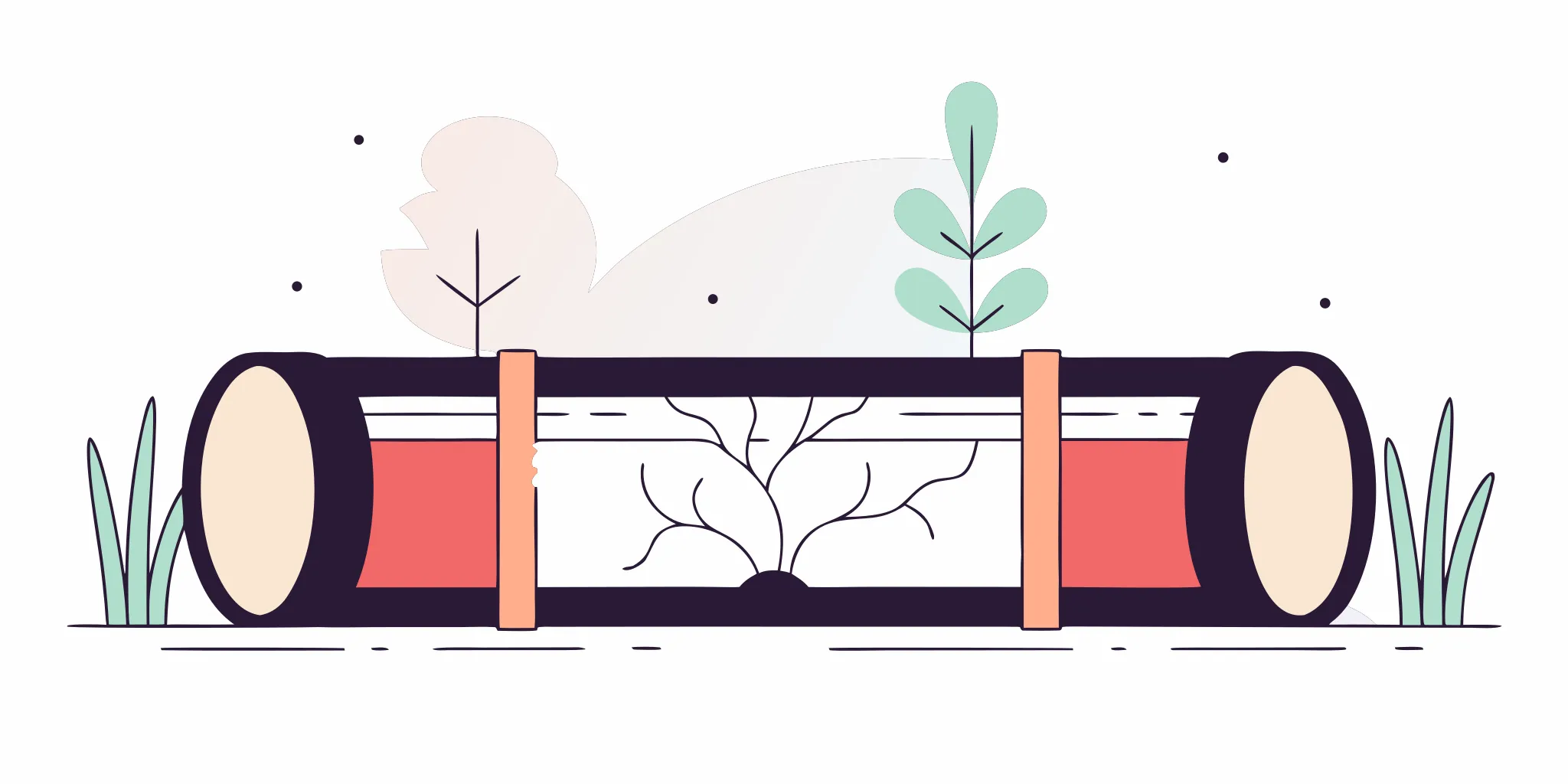
As more roots enter, they can form a dense mass that catches toilet paper, grease, and other wastewater debris. Flow slows, backups become more likely, and repeated cleaning may be needed. Continued root growth can place stress on the surrounding joint or damaged section. In advanced cases, the opening can expand enough to cause joint separation, soil intrusion, or partial collapse.
Root intrusion is considered one of the most destructive problems found in wastewater collection systems, according to the University of California Agriculture and Natural Resources. The damage is not limited to properties with a tree directly above the sewer route. Roots searching for moisture can extend from one end of a typical yard to the other. So the source may be farther from the pipe than a homeowner expects.
Why a Camera Inspection Comes First
Symptoms such as recurring clogs or multiple slow drains can suggest a root problem. But they do not show whether the pipe has a crack, shifted joint, or larger structural failure. A sewer camera inspection maps the condition inside the line and helps distinguish a removable obstruction from damage that requires restoration. Pipe Surgeons can provide the camera work, locate the affected section, and determine the right repair approach.
Schedule a sewer camera inspection with Pipe Surgeons to identify the cause of recurring blockages and fix the line the right way.
What Warning Signs Point to Tree Root Damage in a Sewer Line?
Indoor signs that deserve attention
Tree-related sewer problems often begin with changes that seem minor. A drain that gurgles or bubbles after another fixture runs can mean air is being pushed through a partial blockage. Slow drains that return after cleaning, toilets that keep clogging, and sewage odors near fixtures all point to something below the surface.
Outdoor signs around the sewer route
Look beyond the fixtures when symptoms keep returning. Unexplained soggy areas, unusually lush growth, or a sunken strip in the yard can indicate a leak or a growing root mass. A sudden depression near the sewer lateral deserves attention because soil may be washing into a damaged section of pipe.
Tree roots typically exploit an existing crack, loose joint, or other opening rather than creating a defect in an intact pipe. As the intrusion grows, water seeps into the soil around the line, which can make the lawn greener exactly where the pipe runs.
When to schedule a camera inspection
A sewer camera inspection can identify whether roots are inside the line, where the intrusion occurs, and whether the pipe has cracks, joint separation, or other damage. The earlier the inspection happens, the more options remain for a straightforward repair. Repeated clogs and backups are the most direct signal that a camera should look inside the pipe.
Notice recurring backups, sewage odors, or a sunken area near your sewer line? Book an appointment with Pipe Surgeons for expert diagnosis and a free consultation.
Why Older and Vulnerable Pipes Attract Tree Roots
Many homes built before the 1970s still have sewer lines made from clay, concrete, cast iron, or Orangeburg. These materials can deteriorate over decades, developing hairline cracks and loose joints that invite roots. Pipe material is not the only factor. Pipe depth, soil type, and the location of mature trees all influence how quickly an opening becomes a root intrusion.
Roots do not usually break into an intact sewer pipe. They follow moisture and nutrients escaping through an existing crack or separated joint, then gradually widen the opening. That is why a pipe with one vulnerable joint near a large tree can develop a serious blockage while a newer line in the same yard stays clear.
Know which pipe material and condition you are dealing with before choosing a repair. A camera inspection can show whether the issue is an isolated root mass, a cracked section, separated joints, or a line that is beginning to fail across multiple points.
How root intrusion worsens over time
The first opening may be too small to cause an obvious problem. As the root finds moisture and nutrients, however, it increases in diameter and expands the gap. Debris then collects behind the root mass, and the cycle accelerates. The result is a failure that looks sudden but has actually been developing for months or years.
Modern PVC is more resistant to breaking down and has a potential service life of more than 100 years, according to North Carolina Cooperative Extension. That longevity depends on proper installation and clean joints, which is why inspection matters for both old and new systems.
Schedule an inspection with Pipe Surgeons to identify the damaged section and choose a lasting repair approach.
How Tree Root Blockages Are Removed
Removing roots from a sewer line is a staged process. The goal is not merely to open a path for wastewater, but to identify where the roots entered and whether the pipe itself is damaged. Professional rooter and drain cleaning services use a repeatable sequence:
Why DIY root removal can make the problem worse
Household snakes and caustic drain cleaners are not substitutes for diagnosis. A small DIY snake may stall in the intrusion, leave root fragments behind, or push debris deeper into the line. Caustic cleaners can also damage aging pipe surfaces, creating easier entry points for the next round of root growth.
Need a recurring blockage cleared and evaluated? Schedule professional rooter and drain cleaning before the line backs up.
How Does Trenchless Repair Fix Root-Damaged Sewer Lines?
Once roots have entered a cracked sewer line, cutting out the growth may restore flow without repairing the underlying failure. A lasting solution addresses the opening itself. With cured-in-place pipe lining, or CIPP, a resin-saturated liner is inserted into the existing sewer pipe and cured in place. It forms a seamless new pipe within the old one, closing cracks and separated joints so roots have no open path back into the line. Pipe Surgeons provides sewer pipe repair using trenchless methods across its seven-county service area.
Why CIPP protects the property as well as the pipe
CIPP is particularly useful when the damaged line runs beneath a lawn, driveway, patio, mature landscaping, or other hard-to-replace surface. The process restores the pipe from access points rather than requiring a trench along its full length. The U.S. Environmental Protection Agency identifies trenchless rehabilitation as a method that can eliminate extensive excavation and the associated property damage: EPA trenchless technology guidance.
The right repair still depends on the pipe's condition, route, diameter, and access. A camera inspection helps determine whether lining is appropriate after roots have widened a crack or compromised a joint. If the pipe has collapsed or its shape cannot support a liner, another trenchless method or a targeted replacement may be more suitable.
| Consideration | Traditional excavation | CIPP trenchless lining |
|---|---|---|
| How the line is reached | Soil is opened along part or all of the damaged pipe route. | The liner is installed through existing or limited access points. |
| Property impact | May disturb lawns, driveways, landscaping, and other surfaces above the line. | Usually avoids digging up the surface above the pipe. |
| Root protection | Replacing a section can solve the immediate defect, but additional weak joints may remain elsewhere. | The cured liner creates a continuous inner barrier that seals the repaired section against root re-entry. |
| Value | Includes excavation, hauling, restoration, and surface repair costs. | Pipe Surgeons may save customers 30% or more compared with excavation, depending on project conditions. |
For homeowners dealing with tree root damage sewer line problems in South Florida or along the Treasure Coast, Pipe Surgeons provides trenchless sewer and drain repair. The focus is on permanent restoration rather than repeated root cutting. The company holds Florida license CFC1429372, and every technician is licensed, certified, background-checked, and drug-free. Emergency service is available 24/7 when a damaged line backs up.
Preventing Tree Root Damage and When to Call for Help
Good sewer-line care starts before a blockage becomes an emergency. Thoughtful planting, safer drain habits, and periodic inspections can reduce avoidable stress on an older line. They cannot prevent every root problem, however, because roots are often responding to a weakness that already exists in the pipe.
Plan landscaping around the sewer line
When adding a tree or large shrub, identify the path of the sewer lateral first and place the planting well away from it where the property allows. The goal is not to guarantee that roots will never reach the line. Roots can travel significant distances in search of moisture. Keeping trees off the line also means the tree will not have to be removed if the pipe needs maintenance later, according to North Carolina Cooperative Extension.
Protect older pipes by avoiding highly caustic chemical drain cleaners. These products may damage aging sewer-pipe surfaces and create easier access points for root infiltration. If a drain is repeatedly slow or a backup returns after cleaning, a camera inspection is more useful than repeatedly adding chemicals. A camera can show whether the problem is a removable root blockage, a separated joint, a crack, or another defect that needs permanent repair.
Periodic sewer camera inspection is especially valuable for properties with mature trees, older pipe materials, or a history of backups. Finding a small gap early gives you more options than waiting for roots to enlarge the opening and restrict flow. Ask for an inspection when multiple fixtures drain slowly, sewage odors persist, or the yard develops an unexplained wet or depressed area.
Call for help promptly when wastewater backs up into the home, several drains fail at once, or a suspected break threatens your property. Pipe Surgeons provides 24/7 emergency service across Brevard, Indian River, St. Lucie, Martin, Palm Beach, Broward, and Miami-Dade counties, with a free consultation to assess the next step.
Call Pipe Surgeons at (877) 747-3494 to schedule a sewer-line assessment and address tree root damage sewer line problems before they become more disruptive.
Frequently Asked Questions
How do tree roots damage sewer lines?
Roots do not create the first crack in a sewer pipe. They follow moisture and nutrients through existing cracks, leaks, or loose joints, then grow inside the opening. As the root thickens, it can widen the gap, trap waste, and increase the risk of recurring blockages or structural failure. A sewer camera inspection can show whether roots are causing a blockage or revealing a larger pipe defect. North Carolina Cooperative Extension explains this root-intrusion process.
What warning signs suggest roots are inside a sewer line?
Watch for slow drains that return after cleaning, repeated clogs, gurgling toilets, sewage odors, or backups affecting more than one fixture. Wet, unusually green, or depressed areas in the yard can also deserve attention, especially near the sewer route. These symptoms can have other causes, so a camera inspection is the reliable way to locate the blockage and assess the pipe.
How are tree root blockages removed from sewer lines?
A technician can use a mechanical root cutter or hydro jetting to clear the immediate obstruction, then run a camera through the line to check the result. Clearing roots restores flow, but cutting alone may not correct the crack or separated joint that allowed them inside. Avoid caustic drain cleaners, which can damage older pipes and create easier entry points for roots. NCSU Cooperative Extension cautions against this risk.
Is trenchless repair effective for root-damaged pipes?
When the pipe is a suitable candidate, cured-in-place pipe lining creates a continuous inner liner that seals cracks and joints against renewed root entry. It can restore the line without the extensive excavation associated with traditional replacement. A camera inspection and condition assessment should come first, because severe collapse or other site conditions may require a different repair approach. The EPA describes trenchless rehabilitation as a way to reduce extensive excavation.
Ready to Restore Your Sewer Line?
A camera inspection can show whether tree roots are causing a blockage or damaging the pipe itself, helping you choose the right repair path. Pipe Surgeons serves South Florida and the Treasure Coast with trenchless solutions designed to preserve your property. Schedule a sewer camera inspection with Pipe Surgeons today and get a free consultation. Emergency service is available 24/7.