

A vacant property can develop a sewer odor at the worst possible time: just before an inspection, sale, tenant move-in, or reopening. Because no one is present to notice when the smell starts or changes, a minor plumbing condition and a potentially serious hazard can be easy to confuse.
Schedule professional guidance for your vacant property.
Sewer gas odor testing vacant property should begin with a safety-first assessment, not a do-it-yourself gas reading. An odor can point to a dry trap, damaged drain line, or another pathway, but it does not confirm which condition is present. OSHA says hydrogen sulfide monitoring must be performed by a qualified person using appropriate equipment, especially where exposure is possible: OSHA guidance.
The right next step is to understand what professional testing can establish, what it cannot, and how vacancy changes the order of decisions. That starts with defining the scope of an odor assessment before anyone enters or reopens the property.
What Does Sewer Gas Odor Testing Mean in a Vacant Property?
Extractable summary: Sewer gas odor testing in a vacant property is a professional process for assessing an unexplained sewer-like smell. Identifying possible plumbing pathways, and determining whether further repair or safety action is needed. An odor report alone is not proof of a hydrogen sulfide reading or a confirmed gas leak.
For an owner or property manager, the distinction matters. A vacant home, apartment, or commercial building may be opened only occasionally, so an odor can be intermittent and difficult to observe during a brief walkthrough. Testing should therefore consider where the odor is noticed, when it appears. Which fixtures or drains are nearby, and whether the building has signs of a damaged or disconnected sewer line. Those observations help a qualified professional choose an appropriate diagnostic approach.
Hydrogen sulfide is one potential hazard associated with sewer environments. An academic review identified it as a potential respiratory hazard and noted that exposures may occur as incidental peaks rather than at a constant level. The research also reports inconsistent findings about exposure and respiratory effects, so an odor should not be treated as a reliable measurement of concentration. Read the peer-reviewed review of respiratory hazards in sewage environments for context.
In practical terms, sewer gas odor testing asks two separate questions: what conditions could be allowing sewer odors into the property. And does the situation require qualified atmospheric monitoring or emergency action? Do not enter confined spaces, use gas meters, or attempt smoke testing yourself. If a dangerous gas leak is suspected, leave the property, avoid ignition sources, and contact the appropriate utility or emergency authority from a safe location. For suspected plumbing-related defects, professional leak detection services can help establish the next safe step.
Why Can a Vacant Property Develop a Sewer Odor?
Summary: An unoccupied building can develop an intermittent sewer smell when plumbing fixtures, drains, and connected lines go unused. The odor is a reason to investigate, not proof by itself of a hazardous gas concentration or a specific pipe defect.
During a vacancy, sinks, showers, floor drains, and toilets may receive little or no water. That changes the conditions in the plumbing system and can allow sewer odors to become noticeable through a drain or fixture. The smell may come and go rather than remain constant, especially when the property is visited at different times or weather and ventilation conditions change.
Odor alone cannot identify the source. It may be associated with an unused fixture, a damaged or disconnected line, a venting problem, or another plumbing condition. Hydrogen sulfide can occur in sewer environments, and research describes exposure as potentially hazardous, but the evidence also includes inconsistent findings. A person should not use smell as a gas measurement or attempt to test a vacant building with consumer equipment.
Observations that justify professional review
Record which rooms or fixtures are affected, when the odor appears, whether it returns after the building has been closed. And whether there are visible signs of leaks, staining, damaged cleanouts, or drainage problems. Recurring odor, an odor near a utility area or crawlspace, uncertainty about the source. Or any concern about a damaged sewer line warrants qualified evaluation before reopening the property.
A professional may select an inspection method based on the layout and observed conditions. For example, a camera inspection can help identify and document sewer-line issues, while the sewer smoke testing process may help trace certain leak pathways. Neither method should be treated as a substitute for qualified safety assessment.
What Safety Checks Come Before Sewer Gas Testing?
Summary: Before any sewer gas odor testing, keep people out of unsafe areas, treat suspected dangerous gas as an emergency, and leave atmospheric monitoring to qualified professionals.
Safety comes before diagnosis, especially in an unoccupied property where a problem may have developed unnoticed. An odor is not the same as a confirmed hazardous reading, but possible hydrogen sulfide exposure should never be treated as a routine plumbing nuisance. OSHA says air monitoring must be performed by a qualified person using appropriate equipment, with monitoring before and during work where exposure is possible. Review OSHA's hydrogen sulfide evaluation and control guidance before arranging any testing.
In short, safe sewer gas odor testing for a vacant property begins with exclusion, emergency judgment, and qualified monitoring. Owners should document what they observed, not attempt to confirm a dangerous atmosphere themselves.
Which Professional Tests Can Locate the Odor Source?
Summary: Professional testing methods answer different questions about a vacant property's odor pathway, sewer-line condition, and plumbing integrity. A qualified provider should select the method rather than treating any one test as universal proof of a gas hazard.
No single test serves as a universal sewer gas test. The right approach depends on the property's layout, the plumbing symptoms, access conditions, and whether the concern is an odor pathway, a visible defect, or overall pipe integrity. A qualified professional may begin with a visual and plumbing review, then recommend a more focused method.
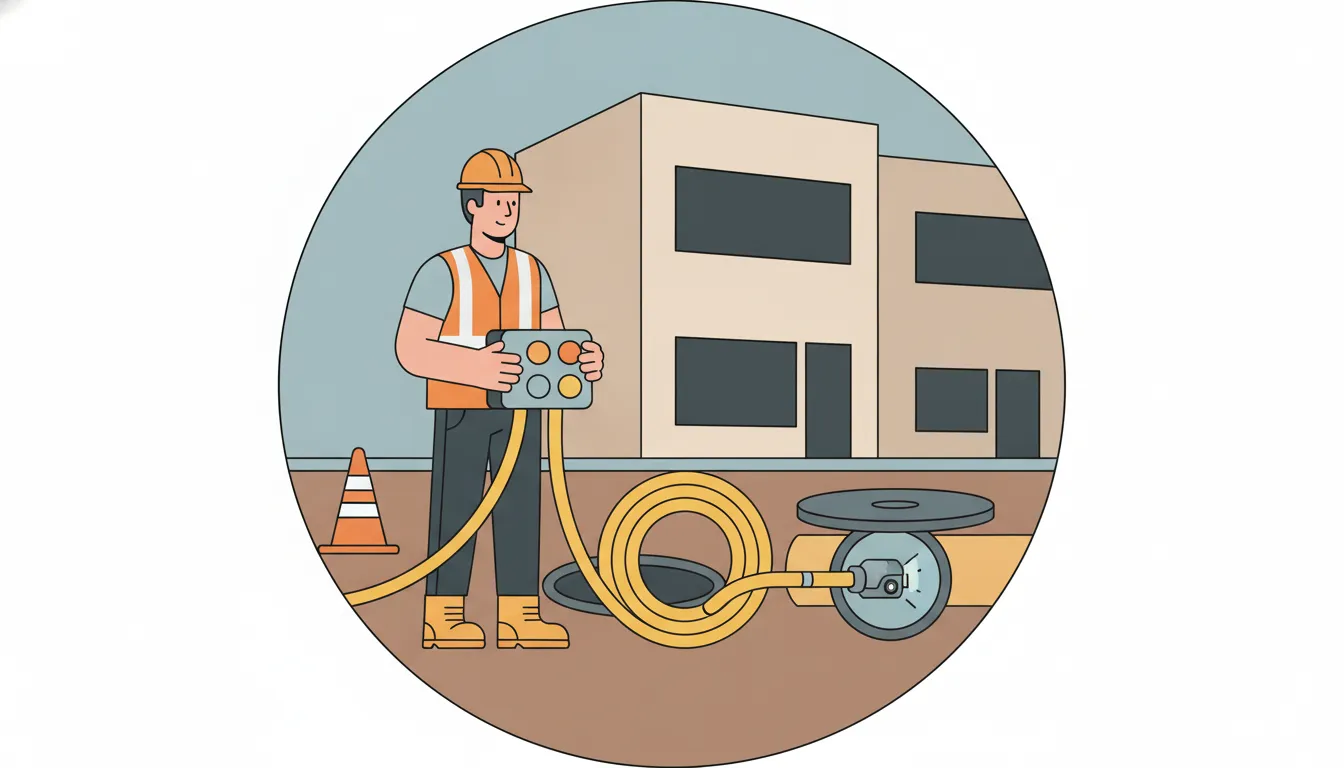
| Method | Best use | Limitation |
|---|---|---|
| Visual and plumbing review | Connects the odor pattern with fixtures, traps, cleanouts, vents, visible damage, and property conditions. | May not identify a concealed break or confirm the precise path of an intermittent odor. |
| Sewer camera inspection | Locates sewer-line issues and creates video documentation for owners and property managers. | Shows the accessible pipe interior, but does not by itself test every possible odor pathway. |
| Smoke testing | Helps pinpoint leak locations and trace potential pathways through a sewer system. | Requires professional planning and controlled conditions; it is not a DIY procedure or a standalone hazardous-gas reading. |
| Hydrostatic testing | Uses water to expose defective pipes and assess plumbing-system integrity. | Assesses system performance and defects, but does not automatically identify the source of every odor. |
These methods answer different questions. A camera can document a line defect, smoke testing can help trace a leakage route, and hydrostatic testing can evaluate integrity. The findings may also guide how sewer leaks are found and whether further repair investigation is appropriate.
Summary: Professional sewer gas odor testing for a vacant property should match the suspected condition. Treat the methods as complementary diagnostic tools, not interchangeable proof of a gas hazard.
How Should Owners Document Findings Before Reopening?
Summary: Create one dated record that connects each odor report to its location, timing, visible conditions, professional findings, and repair decision. This gives owners and managers a clearer basis for reopening or requesting additional evaluation.
Start with the property map, not a general statement such as "the building smells like sewer." Note the rooms. Floor drains, bathrooms, kitchens, utility areas, and exterior access points where an odor was noticed. Record whether the odor was present at arrival, appeared after a fixture was used, or returned after the property sat unused. Intermittent patterns matter, but they do not establish the source by themselves.
Describe observable conditions without guessing at the cause. Record standing water, damaged fixtures, visible leaks, wet areas, drain covers, staining, or signs of prior repair. Include the date, time, weather if relevant to the observation, and who made the entry. Photos can help preserve visible conditions, but do not enter a confined space or investigate a suspected gas hazard to collect them.
Keep professional findings with the property record. If a sewer camera inspection produces video, save the file with the inspection date and note the locations or defects identified by the technician. Camera inspection can locate sewer-line issues and provide video documentation, but the footage should be interpreted alongside the site conditions and other testing.
Finally, document the decision made for each finding: monitor, clean or repair a fixture, request additional testing, restrict access, or complete a line repair. When the evidence points toward a damaged sewer line, review the sewer line repair warning signs and preserve the professional recommendations, not just the final invoice. A complete record helps the next owner, manager, or contractor understand what was observed and why reopening was approved.
When Should a Property Manager Call for Professional Help?
Summary: Call for professional help when a vacant property's odor recurs, the source is uncertain, a line defect is possible, documentation is needed, or anyone may be unsafe.
A property manager should arrange professional help when a sewer-like odor keeps returning, becomes stronger, or appears in more than one area. An intermittent smell can still matter, especially when a building has been vacant and the source is unclear. Odor alone cannot confirm which pipe, fixture, or gas is involved, so avoid treating the smell as a diagnosis.
Professional evaluation is also appropriate when the odor is accompanied by slow drains, backups. Unusually wet ground, bubbling fixtures, or other signs that may point to a damaged or defective line. A sewer camera inspection can help identify the type and location of sewer-line issues while providing video documentation for owners, tenants, insurers, or contractors. That record can make it easier to compare the observed condition with the proposed repair.
Call for a planned assessment before reopening, selling, or transferring responsibility for a property when no one can confidently identify the source. A qualified provider can determine whether leak detection services or another diagnostic method fits the property layout and observed conditions. Testing should be selected for the suspected problem, not assumed to prove a sewer-gas source in every case.
Commercial responsibility is another clear reason to involve a specialist. Managers overseeing apartments, offices, retail buildings, or mixed-use properties may need coordinated documentation and a repair plan. Pipe Surgeons serves commercial customers as well as residential, industrial, and municipal properties; its commercial plumbing services page provides relevant service context.
If anyone suspects a dangerous gas leak or feels unsafe, leave the building, avoid ignition sources, and contact the appropriate emergency authority from a safe location. Pipe Surgeons identifies plumbing-related gas leaks as safety-critical situations and advertises 24/7 emergency service, including weekends and holidays. Do not enter a confined space or attempt gas monitoring yourself.
Summary: Recurring odors, uncertain sources, possible line defects, commercial documentation needs, and safety concerns all justify professional review before a vacant property is reopened.
What Should a Safe Reopening Checklist Include?
Summary: Before reopening a vacant property, confirm that the odor concern has been evaluated, known defects have been addressed, and the final decision is supported by clear records. Keep the checklist focused on safe decisions, not do-it-yourself gas testing.
Use these steps before occupants, tenants, staff, or customers return:
- Confirm the safety issue is cleared. If the odor may involve a dangerous gas leak, leave the property, avoid ignition sources, and contact the appropriate utility or emergency authority from a safe location. Reopening should wait until the relevant authority or qualified professional confirms that it is appropriate.
- Review visible conditions. Look for obvious moisture, damaged fixtures, standing water, drain issues, or areas where odors were reported. Do not enter confined spaces or attempt to test gas levels yourself.
- Preserve professional findings. Keep service notes, photographs, video documentation, and any written explanation of what was inspected. A sewer camera inspection may provide useful documentation when a line issue is suspected.
- Resolve known defects. Record which repairs were completed, who performed them, and whether any follow-up remains. If testing points toward a damaged sewer line, review the sewer line repair warning signs before making a final maintenance decision.
- Document the final decision. Note the date, property areas reviewed, outstanding limitations, and the person responsible for approving occupancy. Managers of larger buildings may also want to retain the record with their commercial plumbing services documentation.
Schedule professional help for your vacant property.
Frequently Asked Questions About Sewer Gas Odor Testing in Vacant Properties
Can a vacant property develop a sewer odor even when no one is living there?
Yes. An unoccupied property can still develop an odor when plumbing conditions change or a sewer-line issue is intermittent. Treat the odor as a condition to document and evaluate, not as proof of one specific failure.
Is smelling sewer gas enough to confirm a hazardous gas leak?
No. Odor alone cannot establish which gas is present or its concentration. If you suspect a dangerous gas leak, leave the property, avoid flames and other ignition sources, and contact the appropriate utility or emergency authority from a safe location.
Can a property owner test for hydrogen sulfide with a consumer gas meter?
Do not make this a DIY testing project. OSHA states that hydrogen-sulfide air monitoring must be performed by a qualified person using appropriate equipment, with monitoring before and during applicable work. See OSHA hydrogen sulfide guidance.
Which professional test is best for a vacant property?
There is no universal test. A professional may recommend a camera inspection, smoke testing, hydrostatic testing, or another evaluation based on the layout, observed conditions, and suspected source. A camera inspection can also provide video documentation for the owner or manager.
When should a property manager arrange professional sewer odor testing?
Arrange an evaluation when the odor returns, the source is unclear, a line defect is suspected, or documentation is needed before reopening, sale, or occupancy. Escalate immediately if anyone may be exposed to a dangerous gas condition, rather than entering to investigate it yourself.
Schedule Professional Sewer Odor Guidance
Vacant properties can make sewer odor patterns difficult to evaluate, especially when conditions change between visits. A professional review can help clarify which testing approach fits the property and what should be documented before reopening.
Schedule sewer odor and leak-detection guidance with Pipe Surgeons.