
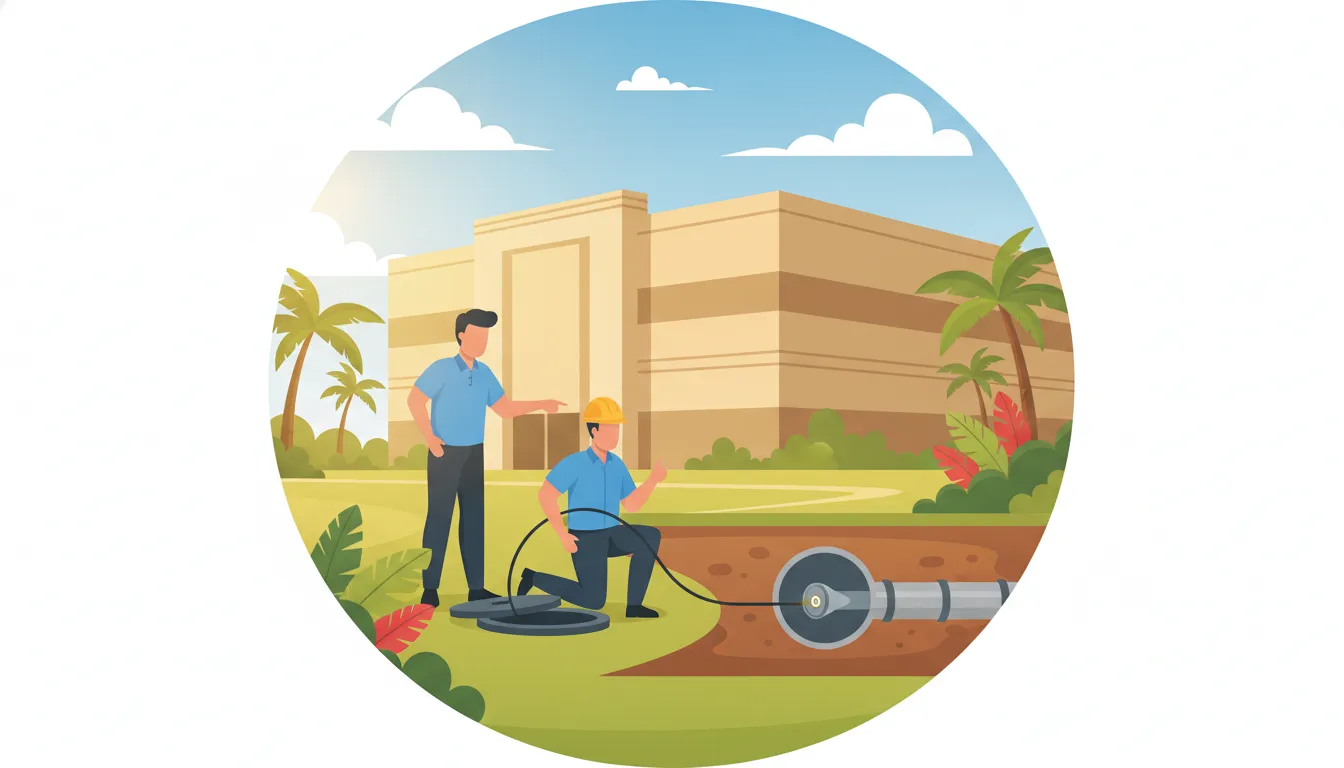
Before buying commercial land, treat a sewer easement as two connected but separate due-diligence questions: what the records allow, and what condition the underground pipe is actually in.
Schedule a commercial sewer camera inspection
A sewer easement inspection before buying commercial land should combine title and survey review with an authorized pipe-condition inspection. Records can identify easement rights, access obligations, and limits on planned improvements. A camera inspection can document the accessible sewer line, locate defects, and provide video evidence. Neither step replaces the other, and a camera inspection does not establish legal easement boundaries.
That distinction matters when a planned building, paving project, or site operation depends on reliable sewer access. Start by understanding what a sewer easement means in the transaction, then coordinate title, survey, utility, and pipe specialists around the same property questions.
What Is a Sewer Easement in a Commercial Land Purchase?
Summary: A sewer easement is a recorded right that may allow a public agency, utility, or other authorized party to access, maintain, or use sewer infrastructure on private land. Reviewing that right is different from inspecting the physical condition and location of the pipe.
For a commercial land buyer, the first question is not simply whether a sewer line crosses the parcel. It is what the recorded documents allow, who owns or operates the utility, and whether the easement affects the intended use of the property. Title review can identify recorded restrictions and other matters affecting the parcel. A commercial survey may also show easements that could interfere with planned improvements, access, or site layout. Confirming whether sewer service is public or private, and whether the property has the necessary utility rights, belongs in the transaction's due-diligence process.
The easement record does not tell you everything about the pipe. A camera inspection can help document the line's interior condition, identify a problem's location, and trace corners or turns where accessible. It does not establish the legal boundary of an easement, prove ownership, or replace title and survey review. Physical access may also require authorization, and an inaccessible segment may remain outside the inspection scope.
Rules vary by jurisdiction. For example, Portland explains that some public sewer easements give the city construction, maintenance, and access rights while limiting certain activity in the easement area. Its guidance also cautions that mapped easements may be incomplete or inaccurate. That example is not a rule for Florida commercial property. Have a title professional, surveyor, attorney, utility authority, or local agency answer legal and jurisdiction-specific questions. A qualified pipe specialist can then address the separate question of sewer condition. Review the public sewer easement example for context, not as a substitute for local guidance.
Why Does Sewer Easement Inspection Before Buying Commercial Land Matter?
Summary: A sewer easement inspection gives a commercial buyer documented information about underground condition, access, and operational risk before closing. It complements title and survey review, but does not replace either one.
Commercial due diligence often emphasizes structural condition, environmental concerns, title, survey, zoning, and financing. Underground sewer and drain systems can receive less attention even though they are essential infrastructure for offices, retail sites, industrial properties, restaurants, and other commercial uses. A failure may involve collapse, clogging, root intrusion, or corrosion, with consequences that affect operations and the buyer's post-closing decisions.
That is why the inspection belongs inside the pre-closing process rather than being treated as a maintenance task after acquisition. A documented camera inspection can help identify the type and location of a defect. Preserve video evidence, and give the buyer a clearer basis for deciding what needs additional investigation. If findings could affect the intended use of the land or an existing building, the buyer can ask the appropriate professionals to assess the operational and transaction implications.
What the inspection can clarify
- Whether visible pipe conditions warrant further technical review or a repair estimate.
- Whether the observed line location and access points align with the records and site information being reviewed.
- Which questions should be directed to the seller, title company, surveyor, municipal authority, or legal counsel before closing.
The goal is not to promise a particular savings amount or a guaranteed negotiation result. The goal is to replace an avoidable information gap with evidence that helps the commercial team make a better-informed decision before the closing window ends.
What Records and Access Questions Should You Resolve First?
Summary: Before scheduling field work, confirm the seller's records, recorded easement and utility information, authorized access, and the limits of available maps. Use this checklist to coordinate title, survey, legal, municipal, and pipe specialists.
This checklist organizes questions; it does not replace title, survey, legal, or municipal review.
What Can a Sewer Camera Inspection Document?
Summary: A sewer camera inspection can document the accessible pipe route from a building opening toward the city main. Show corners and turns, identify the likely cause and location of visible problems, and preserve video evidence for commercial due diligence. It does not establish legal easement boundaries or replace title and survey review.
For a commercial land purchase, the useful question is not simply whether a camera can enter the line. It is what the inspection can show about the pipe serving the building and how clearly those findings can be connected to the property decision. Pipe Surgeons describes a 360-degree view from a building opening to the connection with the city sewer main. That building-to-main view can help a buyer understand the condition of the accessible sewer route rather than relying only on seller statements or surface observations.
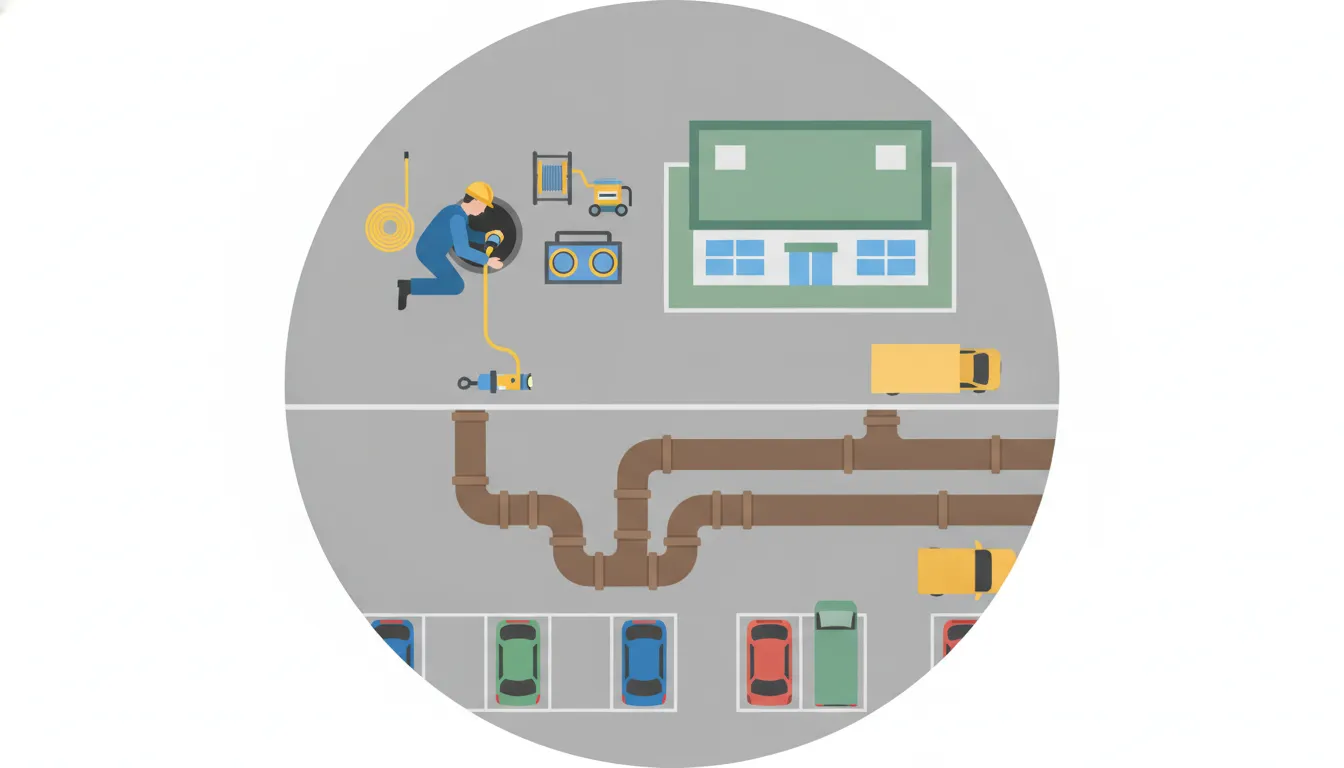
The camera can also document the route itself. On properties with complicated configurations, the inspection may locate corners, twists, and turns that are difficult to understand from records alone. That physical information can help the buyer compare observed pipe routing with available plans, survey information, and authorized access areas. The camera view is technical evidence about the pipe. It is not a survey of the parcel, and it cannot establish where a legal easement begins or ends.
When the camera encounters a defect, the inspection can help identify its cause and location. Depending on what is visible, findings may include a clog, root intrusion, corrosion, cracking, leakage, or another condition affecting flow. Identifying the type of obstruction or defect supports a more appropriate next step instead of treating every sewer problem the same way. Images may also reveal developing concerns that have not caused a failure yet, giving the property team an earlier opportunity to investigate.
Video documentation gives buyers a record to share with their title, survey, legal, and construction advisers. A professional sewer camera inspection can preserve what was visible at the time of the inspection, while a commercial sewer camera inspection can be scoped around the building, access points, and transaction questions.
Scope still depends on cleanout accessibility, equipment needs, and plumbing complexity. A blocked, inaccessible, or unusually complex route may limit how far the camera travels or require a different investigation plan. Confirm the authorized access points and intended inspection route before scheduling, then use the documented findings with the professionals handling title, survey, and transaction terms.
How Should Buyers Organize Findings Before Closing?
Summary: Keep the camera video, written findings, repair scope, operational impact, and transaction questions together so the buyer's team can review the same evidence before closing.
A useful closing file should connect each observed condition to a location, a supporting video segment, and a practical decision. Save the inspection video with a dated report and note the cleanout or access point used. If the camera identifies a defect, record its location and likely effect on the property's intended use. A sewer camera inspection can help document condition, but it does not establish the legal boundary of an easement or replace title and survey review.
| Question | What to document | Who should confirm it |
|---|---|---|
| What does the pipe evidence show? | Video file, inspection date, access point, observed condition, and the location or segment associated with each finding. | Pipe-inspection professional and the buyer's property team |
| What response may be needed? | Whether additional evaluation is appropriate, the proposed repair scope, access assumptions, and how the work could affect operations. | Qualified pipe contractor, facility lead, and buyer's project team |
| What should the agreement address? | Questions about disclosures, representations, warranties, concealed defects, or a possible concession based on documented findings. | Buyer and seller's real-estate counsel |
Do not treat a repair estimate as a legal conclusion or as proof that a seller must make a concession. The estimate helps the team understand scope and potential operational disruption. Depending on the transaction and the parties' leverage, counsel may evaluate whether the agreement should address sewer-condition representations or warranties, concealed defects, or other remedies. These are questions for counsel, not guarantees.
For a second layer of documentation context, buyers can also review how professionals document sewer-line condition. Then ask counsel which findings belong in the purchase agreement, request the seller's response in writing, and preserve the original video rather than relying only on screenshots. The goal is a clear record that lets the buyer decide whether to proceed, seek further investigation, or revise the transaction terms.
Which Questions Belong With Title, Survey, and Pipe Specialists?
Summary: Title professionals address recorded rights and restrictions, surveyors confirm physical features and easement locations. Local authorities explain public-utility records, attorneys advise on transaction language, and pipe specialists document accessible sewer-line condition.
Assigning each question to the right professional keeps a sewer easement inspection before buying commercial land from becoming a collection of incomplete assumptions. A title professional should review recorded easements, liens, covenants, restrictions, and other matters affecting the property. Ask whether the documents include the utility rights needed for installation, maintenance, connections, and ongoing use.
A surveyor can help identify where an easement appears in relation to proposed buildings, parking, drives, additions, or other site improvements. The survey should be considered alongside the intended use of the property, because an easement may affect how the site can be developed. A survey does not, by itself, prove that a buried pipe follows an assumed route.
Ask the local utility or authority whether the sewer is public or private, who maintains it, what records are available, and what access or construction approvals may apply. Rules, maps, and authorization requirements vary by jurisdiction. For example, Portland explains that some public sewer easements allow municipal access and maintenance while limiting activities in the easement area. And it cautions that mapped easements may be incomplete or inaccurate. That example is not Florida law.
Use an attorney for purchase-agreement language, representations, warranties, inspection rights, and any proposed allocation of concealed-defect risk. Pipe specialists answer the physical questions: where accessible lines run, what condition they are in, and what defects the inspection video documents. Their findings can help the transaction team document sewer-line condition, but a camera inspection does not establish legal easement boundaries or replace title and survey review.
When Should You Schedule a Commercial Sewer Camera Inspection?
Summary: Schedule the inspection during commercial due diligence, after records have been reviewed and physical access has been authorized, so the findings can inform decisions before closing or listing.
The clearest trigger is a planned purchase or sale. Pipe Surgeons recommends a camera pipe inspection before buying or selling because it provides condition information while the transaction team can still investigate questions and document findings. This is especially useful for commercial and industrial properties, where sewer infrastructure supports ongoing business operations.
Coordinate the inspection after the title, survey, utility records, and available maintenance history have been reviewed. Those records help identify the areas that need attention, while the site team or seller can confirm cleanout locations and authorize access. A camera inspection does not establish legal easement boundaries or replace title and survey review. It documents the accessible pipe path and its observed condition.
It is also appropriate when the property has a complicated pipe configuration, unclear line routing, recurring drainage concerns, or an upcoming change in use. The inspection can locate corners, twists, and turns, identify the cause and location of an existing issue, and reveal potential problems that have not yet caused a failure. Preserve the video and findings with the transaction records, then give the buyer's technical and legal advisers time to assess what they mean.
Start with a commercial sewer camera inspection when access is ready. If the findings identify a defect, the next discussion may involve trenchless repair options or other sewer-line replacement considerations. Quote scope varies with cleanout accessibility, equipment needs, and plumbing complexity, so the inspection plan should follow the property rather than a fixed package.
Schedule a commercial sewer camera inspection for the property
Frequently Asked Questions
What should you check before buying commercial land with a sewer easement?
Start with the title commitment, recorded easement documents, current survey, utility ownership, and the property's intended use. Confirm who may access or maintain the line, whether the planned improvements could conflict with the easement, and whether physical access is authorized. Then arrange a sewer camera inspection to document pipe condition and location. A camera inspection does not establish legal boundaries or replace title and survey review.
Can a sewer easement limit commercial development?
It can, depending on the recorded rights and local requirements. Public sewer easements may give a municipality access and maintenance rights and may restrict activities or construction in the easement area. Portland describes those potential effects, but its rules are not Florida law. So have your title professional, surveyor, attorney, and local utility confirm the requirements for the specific property.
What does a commercial sewer camera inspection document?
An inspection can provide a 360-degree view of accessible sewer lines from the building toward the city-main connection. The video may help identify cracks, corrosion, leaks, clogs, root intrusion, and the location of a defect. Pipe mapping can also document corners, twists, and turns. The final scope depends on cleanout access, equipment, and pipe complexity.
When should the inspection happen in the purchase process?
Schedule it during the due-diligence period, before closing and while inspection access and transaction remedies can still be addressed. Request seller inspection and maintenance records, preserve the video and findings, and ask for repair estimates when needed. Your attorney should advise on representations, warranties, concessions, or other purchase-agreement terms.
What if the sewer line cannot be accessed?
Do not assume an inaccessible line is in good condition. Confirm whether another cleanout or access point is available, identify who must authorize entry, and ask the inspection professional what portion can be evaluated. If a material area remains uninspected, document that limitation and discuss the transaction risk with your title, survey, legal, and technical advisers.
Schedule a Commercial Sewer Camera Inspection
A documented camera inspection can give your property team clearer information about sewer-line condition before closing and help focus follow-up questions on the right specialists. If you are evaluating commercial land, contact Pipe Surgeons to discuss the inspection scope for the site.