
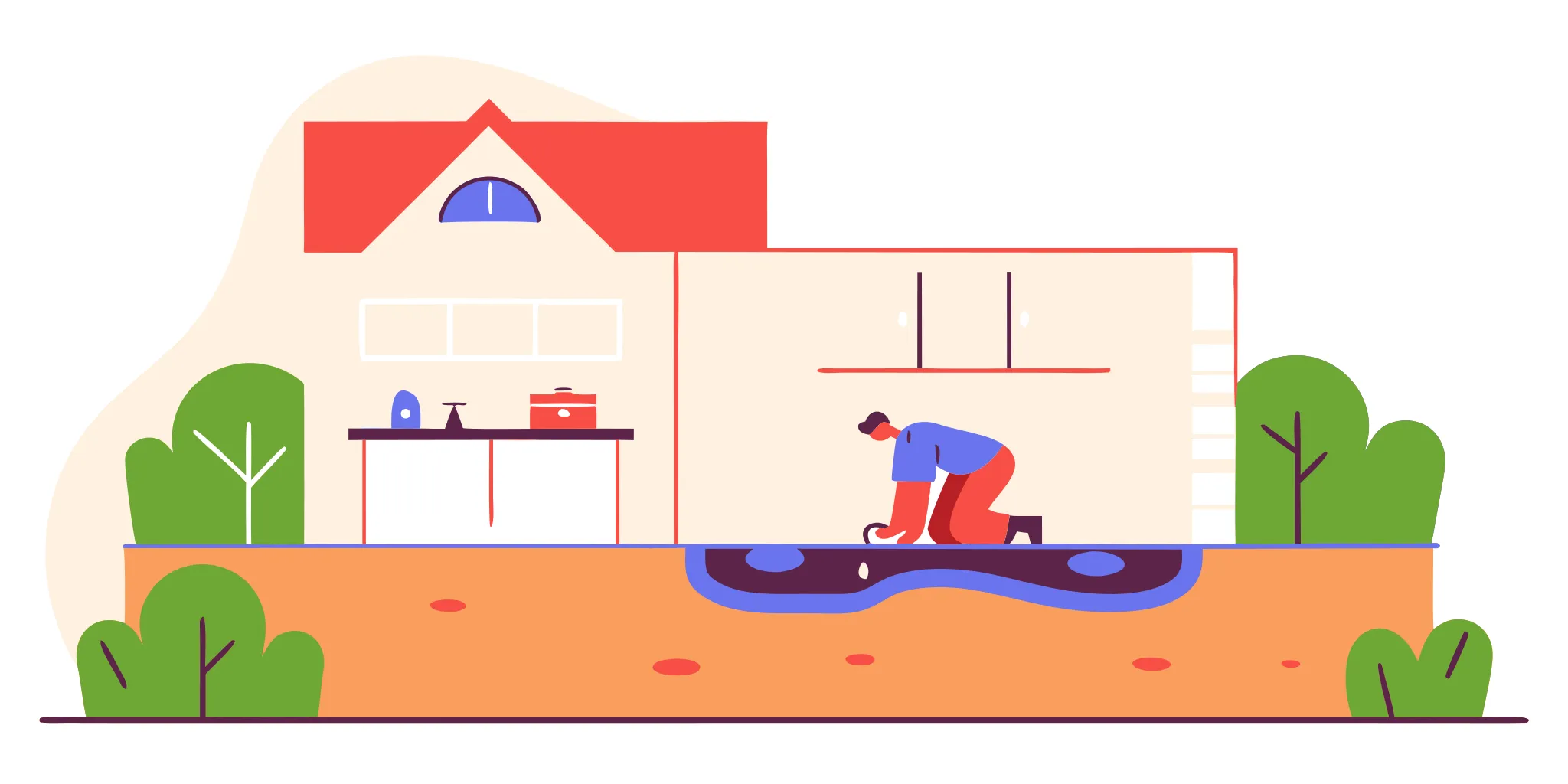
A sudden spike in your water bill often points to a hidden leak deep under your concrete floor. These slab leaks can destroy the foundation of your South Florida home while staying completely hidden. Learning the early warning signs and knowing how to verify them can save you thousands in structural repairs.
By Don Miranda, Owner, Pipe Surgeons | Licensed Florida Contractor #CFC1429372 | 40+ Years in Trenchless Pipe Repair
Learning how to detect a slab leak is vital for South Florida homeowners because hidden pipe breaks can quickly undermine your home's foundation. You can spot these leaks by checking your water meter for movement when all taps are off. Watching for unexplained damp spots on your floor, or listening for running water when everything is closed. The Environmental Protection Agency notes that a family of four using over 12,000 gallons per month in winter likely has a serious leak. Early detection lets you use modern trenchless tools to fix the damaged pipe before the wet soil under your home shifts or sinks.
Book Your Slab Leak Inspection Today → Call (877) 747-3494 for 24/7 service from Melbourne to Miami. Pipe Surgeons uses non-destructive electronic detection methods to find leaks without breaking your floor.
While the signs above are clear, many homeowners do not realize why slab leaks are so dangerous. To protect your property, you must first understand what makes a slab leak different from a common plumbing issue and why South Florida homes are especially vulnerable.
What Is a Slab Leak, and Why Is It a Serious Problem?
A slab leak is a plumbing failure that occurs under your home's concrete foundation. South Florida homes typically sit on concrete slabs rather than basements or crawl spaces, with water and sewer lines running through the ground below. When those pipes crack or burst, water has nowhere to go but up into your flooring or down into the surrounding soil. These leaks are difficult to spot because they remain buried, which makes early detection critical to avoid major structural damage and expensive repairs.
A slab leak happens when the pipes beneath your foundation fail. Because these pipes sit under a thick layer of concrete, you cannot see the leak with your own eyes. Often the only signs are a rising water bill or a warm spot on the floor. Without a clear view, water can flow for months and gradually weaken the parts that hold your home together.
Why South Florida homes are at risk
Building on concrete slabs is the standard approach in our region. The U.S. Census Bureau reports that 63.2 percent of new homes built in 2019 have slab foundations. While these bases are strong, they trap your plumbing under tons of concrete and dirt where repairs are difficult. Heavy Florida rain can shift the soil and put pressure on the lines. The wet, salty ground also accelerates corrosion in metal pipes. When these factors combine, a small pinhole leak can quickly turn into a major problem under your feet.The danger of foundation damage
A leak under your slab weakens the base of your house. Water flowing under the slab can wash away the dirt that supports the concrete, causing your foundation to shift, sink, or crack. If you see cracks in your walls or floors, structural damage may already be extensive. The moisture also creates an ideal environment for mold. The National Institutes of Health notes that damp buildings often suffer from decay that compromises structural components. Scheduling professional leak detection in South Florida as soon as you suspect a problem is the best move to protect your home.7 Warning Signs of a Slab Leak
Slab leaks leave visible clues even when buried under concrete. The seven warning signs include: a spike in your water bill, damp or warm spots on your floor, the sound of running water when all taps are off. Low water pressure throughout the house, new cracks in walls or flooring. Musty odors from mold growth, and a spinning water meter dial when no water is in use. Catching any of these signs early allows you to arrange professional detection before the damage spreads to your foundation.
A slab leak hides deep under your home but still leaves clear signals above the floor. Catching these signs early helps you avoid major repair costs and structural damage. Watch for these red flags in your South Florida home:
High utility bills and water use. If your water usage jumps significantly month over month, you likely have a hidden leak. The EPA notes that a family of four using over 12,000 gallons per month in winter probably has a serious leak. Track your bill closely to catch spikes early.
Damp spots and warm floors. Unexplained damp patches on carpets or tile floors often indicate pooling water. If a hot water line breaks, specific areas of your floor may feel warm. These signals are strong indicators that water is collecting under your foundation.
Sound of running water. Hearing water rushing or hissing when all taps are closed points to an active slab leak. The sound usually comes from under your floor or behind walls. If it never stops, water is flowing out of your pipes every minute of the day.
Low water pressure. A break in the main line under your slab reduces water pressure throughout the house. When less water reaches your shower heads and sinks because it is leaking out under the foundation, you need professional slab leak repair in South Florida.
Cracks in walls and flooring. Slab leaks cause your home to shift as the soil moves or swells from excess water. These structural cracks mean your foundation may be settling or starting to collapse. Spotting them early is vital to prevent long-term damage.
Mold and mildew growth. Water from slab leaks soaks into drywall and flooring, creating a home for mold. A musty odor or dark spots under carpets signal hidden moisture. The NIH confirms that building dampness causes material decay and structural weakening.
Water meter activity. Your water meter is one of the best tools to detect a leak at home. Turn off all taps and check the meter. If the dial is still spinning, you have an active leak somewhere in your system and need professional assistance to pinpoint the exact location.
How to Detect a Slab Leak Yourself: A Simple DIY Guide
You can detect a slab leak at home using three methods: check your water meter for movement when all fixtures are off. Inspect your home for damp spots or warm areas on the floor. Listen for running water when no taps are open. While these DIY tests confirm that a leak exists, they cannot show the exact location under the concrete. Professional tools like ground microphones and thermal cameras are needed to pinpoint the precise spot without breaking your floor.
Finding a leak early can save you from expensive repair bills. While slab leaks stay hidden, you can spot the signs with a few simple checks. Start by monitoring your water bill for sudden spikes. A family of four using more than 12,000 gallons per month during winter may have a serious water leak. The EPA reports that household leaks waste nearly 1 trillion gallons of water annually nationwide — enough to supply 11 million homes. In Florida specifically, slab-on-grade construction means a higher share of these leaks go undetected beneath concrete.
Check your water meter
Your water meter tracks every drop entering your home. Follow these steps to check for an active leak:- Turn off all taps, the washing machine, and the dishwasher.
- Find your meter box near the street or sidewalk.
- Lift the lid and watch the flow indicator for movement.
- If the dial moves when no water is in use, you have an active leak.
- Wait 20 minutes and check again. If the reading has changed, you likely have a hidden pipe break.
Scan for visual clues
Walk through your home looking for moisture. Check for damp patches on rugs, warped wood floors, or warm areas that suggest a broken hot water line. Look at baseboards for mold or musty smells. Dampness causes materials to decay over time. If you find these signs, book a professional detection session to find the exact spot before the damage worsens.When to call a pro
DIY tests confirm that water is being lost, but they cannot see through concrete. Finding the exact leak location requires specialized tools such as ground microphones, thermal cameras, or hydrostatic testing. Fast professional slab leak investigations stop foundation damage before it becomes severe. Pipe Surgeons provides emergency slab leak detection across all seven South Florida counties, from Melbourne to Miami.Professional Slab Leak Detection Methods Pipe Surgeons Uses
Pipe Surgeons uses non-destructive detection methods to locate slab leaks without breaking your concrete floor. These include electronic ground microphones to hear pressurized water escaping, FLIR thermal cameras to identify temperature changes from pooled water. Hydrostatic pressure testing to confirm active leaks in sealed lines, and non-toxic smoke testing to trace drain and sewer breaks. These tools pinpoint the exact leak location so repairs target only the damaged section, saving your floors and your budget.
Finding a leak under a concrete slab is a challenging task. Simple tests can tell you a leak exists, but they cannot reveal the precise location. Pipe Surgeons uses advanced diagnostic equipment to find the exact break point, eliminating guesswork and preventing unnecessary demolition. Our team follows a no-dig approach to keep your property intact while we work.
Ground microphones and thermal cameras
Our technicians use electronic ground microphones to detect the sound of water escaping from pressurized pipes. These tools track the noise to its source with precision. We also deploy FLIR thermal cameras that identify temperature variations in your floor, revealing damp spots and heat shifts invisible to the naked eye. For deeper leaks, ultrasonic sensors pick up high-frequency sounds that confirm the break location. This advanced diagnostic approach reflects our commitment to trenchless technology and minimal property disturbance.Pressure and smoke testing for accuracy
Some leaks are too small or deep for acoustic detection. In these cases, we use hydrostatic leak detection by sealing your plumbing lines and applying water pressure. If the pressure drops, an active leak is confirmed. We also use non-toxic smoke testing to find drain and sewer breaks by pumping safe smoke through the pipes and watching where it rises through the slab or soil. Combining these techniques with sewer camera inspection gives a complete picture of your pipe health. Our Florida license #CFC1429372 ensures all testing meets state standards.Why expert tools save your home
Professional detection limits property damage and saves money. Guessing at a leak location risks tearing up tiles or wood floors for no reason. Precision tools allow for a small, targeted repair that affects only the damaged section. Hidden leaks cause mold and structural rot, and the National Institutes of Health confirms that damp buildings suffer progressive decay. Fast, accurate detection stops these long-term costs and keeps your family safe. Pipe Surgeons serves seven counties with 24/7 emergency service.For Florida Contractors: Identifying Slab Leaks Before Breaking Concrete
General contractors, foundation specialists, and concrete contractors across Florida encounter slab leak symptoms before anyone else. If you arrive at a job site and notice unexplained warm spots on a concrete slab, musty odors near baseboards, or cracks radiating from a central point — you may be looking at a hidden pipe failure rather than a structural issue.
Before scheduling demolition, consider these diagnostic steps:
- Check for moisture: Use a basic moisture meter on the concrete surface. Readings above 20 percent often indicate pooling water beneath the slab rather than groundwater seepage.
- Document the symptoms: Note the location of cracks, damp areas, and any recent water bill spikes reported by the property owner. This data helps leak detection specialists pinpoint the source faster.
- Refer for non-destructive testing: Ground microphones, thermal cameras, and hydrostatic pressure testing can locate the exact leak point without cutting concrete. Pipe Surgeons provides 24/7 diagnostic services for contractor referrals across all seven Florida counties.
Refer a Slab Leak Case → Call (877) 747-3494 for contractor referrals or joint site visits.
What Happens If a Slab Leak Goes Untreated?
An untreated slab leak can cause foundation failure, structural damage, mold growth, and health problems. Water pooling under the slab washes away supporting soil, causing the concrete to shift or crack. Steel reinforcement bars rust and expand, cracking the concrete from within. Mold spreads through damp floors and walls, triggering allergies and respiratory issues. Repair costs for late-stage foundation damage are often five to ten times higher than catching the leak early with professional detection.
Ignoring a slab leak is a costly mistake. What starts as a slow drip grows into a major threat that affects the entire structure of your home. Recognizing the risks of leaving how to detect a slab leak unanswered helps you act before serious damage sets in.
Foundation damage and structural risks
As water pools under the slab, it erodes the soil supporting your home. This causes the concrete to shift or crack. In Florida, approximately 60 percent of homes built before 1990 sit on slab-on-grade foundations — meaning millions of properties are at risk for hidden leaks. According to Pipe Surgeons, untreated slab leaks often lead to foundation settling and structural compromise. You may notice doors that do not close properly or new cracks in walls, indicating the ground beneath is failing. Steel reinforcement bars rust when wet, swelling and cracking the concrete from inside, significantly reducing your home's structural life.Mold growth and health concerns
Standing water under your home creates ideal conditions for mold. Moisture seeps through porous concrete into floors and walls. The National Institutes of Health confirms that damp buildings promote harmful microbial growth that can cause allergies and respiratory issues. A musty odor signals that spores are already circulating in your indoor air. In South Florida's humid climate, this problem accelerates quickly.Financial impact of delayed repairs
A small leak caught early may only need a straightforward trenchless fix. A leak that runs for months destroys the soil and slab, leaving you facing foundation work that costs five to ten times more than early detection and repair. Each month of wasted water also drives up your utility bills. Learning how to detect a slab leak and acting on the signs saves you from these mounting costs.Slab Leak Repair: Trenchless vs. Traditional Excavation
Trenchless repair uses small access points to line the inside of damaged pipes with a durable resin. Creating a new pipe within the old one without breaking your concrete floor. Traditional excavation requires cutting through the slab, which creates dust, noise, and weeks of disruption. Trenchless methods cost less overall because they eliminate floor restoration, reduce labor time, and address the full pipe length rather than patching one section at a time.
After you learn how to detect a slab leak, the next step is choosing the right repair method. South Florida homeowners have two main options: traditional excavation and modern trenchless technology. The choice affects your home, your timeline, and your budget.
How traditional excavation affects your home
Traditional repair requires workers to cut through your concrete slab to reach the damaged pipe. This creates dust, noise, and disruption throughout your home. The process can take weeks, and you may need to move out during repairs. Each repair session targets one spot, but if other sections of pipe are aging, more leaks can follow. The total cost of jackhammering, floor restoration, and repeated repairs often far exceeds the initial estimate.Benefits of modern no-dig fixes
Trenchless pipe repair technology offers a smarter alternative. Instead of breaking your floor, technicians use small access points to reach the damaged line. A special resin liner is inserted into the old pipe and cured in place, creating a strong new pipe inside the old one. This method protects your floors, walls, and landscaping. Most jobs finish in a few days without requiring you to vacate your home. It fixes the full pipe length rather than patching one section, providing a permanent solution.
Feature Traditional Excavation Trenchless Repair
Home damage High (floor and slab removal) Minimal (small access points)
Completion time 1 to 3 weeks 1 to 3 days
Cost of restoration High (new flooring, drywall, painting) None included in repair
Pipe coverage Single spot repair Full pipe length reinforced
Living disruption May require relocation Stay in your home
Longevity 5 to 10 years 50+ years with epoxy lining
Frequently Asked Questions About Slab Leak Detection
How can I tell if I have a slab leak?
Common signs include a sudden spike in your water bill, warm or damp spots on your floor. The sound of running water when all taps are off, and low water pressure throughout the house. Check your water meter with everything turned off; if the dial is still spinning, you have an active leak somewhere.
Can a slab leak fix itself?
No. Slab leaks do not heal on their own and will worsen over time. The constant water flow erodes soil under your foundation, causes mold growth, and leads to structural damage that costs thousands to repair. Professional detection and repair are essential.
How much does slab leak detection cost in South Florida?
Detection costs vary based on the property size and leak complexity, but the service saves money in the long run by preventing unnecessary demolition and targeting repairs precisely. Pipe Surgeons offers free consultations to assess your situation and provide a clear estimate before any work begins.
Will my home insurance cover slab leak repair?
Many homeowner insurance policies cover slab leak repair when the leak is sudden and accidental, such as from a burst pipe. Gradual damage from long-term leaks may not be covered. Check your policy and contact your provider to confirm your coverage details.
How long does trenchless slab leak repair take?
Most trenchless repairs are completed in one to three days, depending on the leak location and pipe condition. Traditional excavation methods can take one to three weeks and require significant home restoration afterward.
Don't Wait Until the Damage Spreads , Get Expert Slab Leak Detection Today
A hidden slab leak will not fix itself. Every day you wait, water erodes the soil under your foundation, mold spreads through your walls, and your repair costs climb higher. Pipe Surgeons has been serving South Florida and the Treasure Coast since 1981, using advanced non-destructive detection methods to find leaks without breaking your floor. Our licensed technicians respond 24/7 with the diagnostic tools needed to pinpoint the exact problem and recommend the right solution.Call (877) 747-3494 or schedule your free consultation online . Save 30 percent or more compared to traditional excavation methods. We serve all seven counties from Melbourne to Miami-Dade.